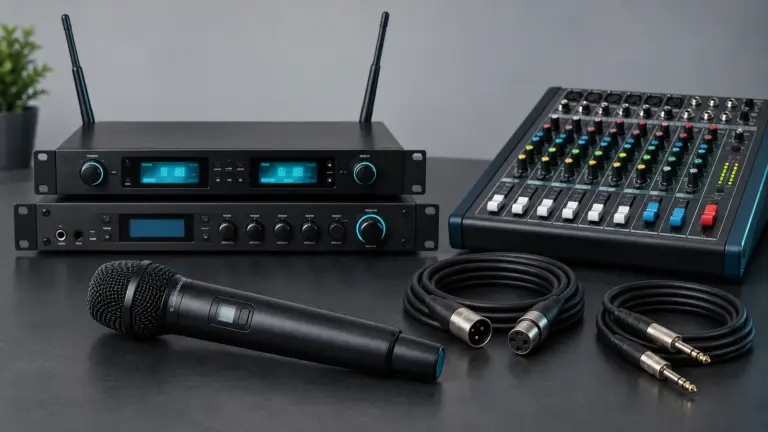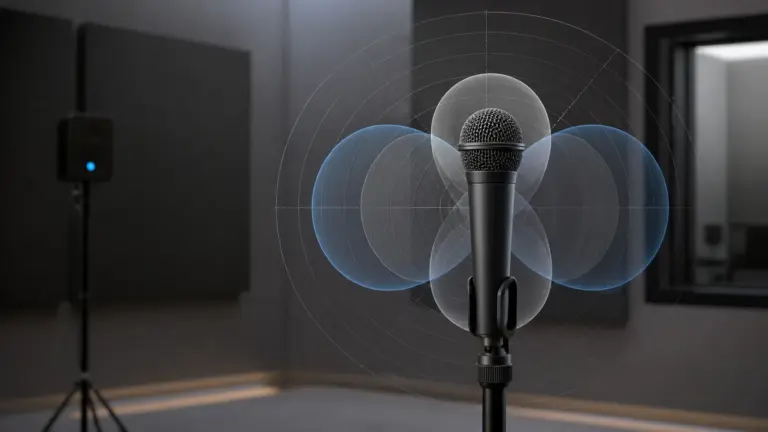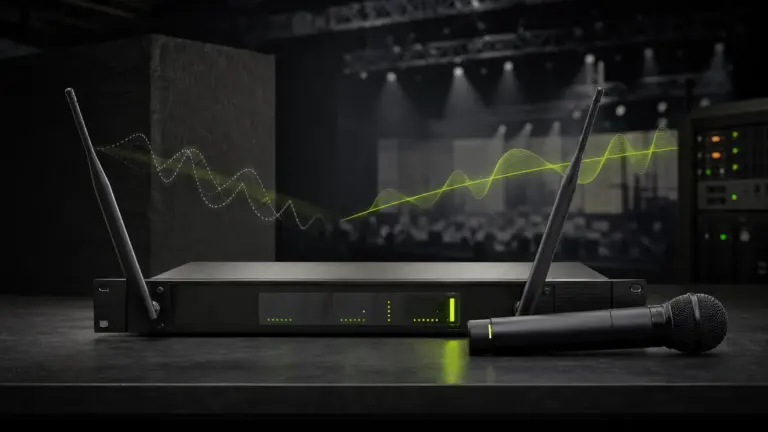


Enping, in Guangdong, China, is a concentrated production and supply area for microphones and a growing range of professional audio and performance equipment. For a B2B buyer, however, finding many suppliers in one place is only the beginning. A reliable sourcing project still requires a clear specification, verified supplier identity, comparable quotations, controlled samples, documented quality requirements, and destination-market checks.
The practical process is:
- Define the product, application, destination market, and order plan.
- Decide whether you need an existing model, private label, OEM, or ODM development.
- Shortlist suppliers whose real role and product focus match the project.
- Send the same structured RFQ to each candidate.
- Verify business identity, manufacturing role, quality evidence, and commercial terms.
- Test samples against written acceptance criteria.
- Lock the approved configuration and inspect production against it.
- Confirm payment, Incoterm, documentation, and shipment responsibilities in writing.
This guide explains each stage and shows what importers, distributors, audio brands, system integrators, rental companies, and project buyers should verify before placing an order.
Why Source Professional Audio Equipment from Enping?
Enping's value comes from industrial concentration. A buyer may find finished-product companies, assemblers, component specialists, packaging providers, and other supporting businesses within the same regional network.
An October 2023 Jiangmen Government report described Enping's electroacoustic industry as having developed over roughly four decades. At that time, it recorded 705 electroacoustic enterprises: 444 finished-product companies and 261 component companies. The report also described a relatively complete local supply chain and identified Enping as a major microphone-production cluster.
The product base is broader than microphones. A May 2024 Jiangmen Government report said 344 Enping companies exhibited at the Guangzhou International Professional Light and Sound Exhibition. It described local product development expanding into amplifiers, speakers, mixers, conference systems, live-streaming systems, public-address equipment, stage structures, and stage lighting.
These are dated industry snapshots, not guarantees about any current supplier. The concentration can make product discovery, comparison, component matching, and factory communication more efficient, but every company, process, document, and product model still needs project-level verification.
Define Your Audio Product Before Contacting Suppliers
“Send me your catalogue and best price” rarely produces a useful shortlist. It encourages suppliers to send whatever is easiest to quote, even when it does not fit the buyer's market.
Start with a short product brief.
Identify the application
State where and how the equipment will be used. Examples include:
- karaoke and KTV rooms;
- live stages and rental systems;
- schools and training rooms;
- meeting and conference spaces;
- houses of worship;
- hotels and hospitality venues;
- public-address installations;
- live streaming and content production;
- retail or private-label distribution.
Application affects configuration. A wireless microphone for a fixed karaoke room has different priorities from a rental system that moves between venues. A small analog mixer and a networked digital console serve different users even when both are called “mixers.”
Define the destination market
Tell the supplier every country where the product will be imported, sold, or used. Destination affects wireless-frequency planning, mains voltage and plug, safety and EMC requirements, labeling, manuals, packaging language, importer information, and required documents.
Do not assume that one wireless tuning range or one certificate set is suitable for all of Southeast Asia, Europe, the Middle East, or the Americas. Requirements must be checked for the actual country and final product configuration.
Separate required specifications from preferences
Organize the brief into three groups:
| Requirement level | Meaning | Example |
|---|---|---|
| Mandatory | The quotation is not acceptable without it | Required connector, legal tuning version, channel count, power input |
| Preferred | Valuable but open to alternatives | Display style, housing finish, accessory arrangement |
| Open question | Supplier should propose and explain | Capsule option, packaging construction, charging method |
This prevents a visually attractive sample from hiding a missing commercial or technical requirement.
State the order plan
Provide the sample quantity, estimated first order, expected annual volume if known, number of SKUs, target schedule, and delivery destination. If the volume is uncertain, say so. Do not present an unconfirmed forecast as a commitment merely to obtain a lower quotation.
Choose the Right Sourcing Model
Not every project requires the same commercial relationship.
Existing model or wholesale supply
This is usually the fastest route. The buyer selects an established platform and may accept the standard appearance, accessories, and packaging. Confirm that the quoted version is the same version tested in the sample.
Private label
An existing product is sold with buyer-specific branding, packaging, manual, labels, or color. Treat private label as a controlled specification. Logo files, print positions, colors, barcode data, carton marks, and language versions should all be approved.
OEM configuration
“OEM” is used inconsistently. In one quotation it may mean only adding a logo; in another it may include housing, circuit, firmware, capsule, accessories, or packaging changes. List every requested modification and ask which processes are in-house, outsourced, or unavailable.
ODM development
ODM projects involve more product-development responsibility and therefore more questions about design ownership, tooling, engineering validation, firmware, test methods, intellectual property, change approval, and project milestones. A vague target price and reference photo are not a sufficient development brief.
Manufacturer, trading company, or sourcing coordinator?
Any of these relationships can be appropriate, but the role must be clear.
| Party | Possible value | What to clarify |
|---|---|---|
| Manufacturer | Direct process and engineering access | What is actually made in-house? |
| Assembler or product company | Integrates specialist components and finished systems | Which critical processes or components are outsourced? |
| Trading/export company | Export documentation, product range, and consolidation | Who manufactures and warrants each product? |
| Sourcing coordinator | Requirement clarification and communication across suppliers | Who quotes, contracts, receives payment, manufactures, inspects, and ships? |
Do not reject a capable company solely because it is not vertically integrated. Instead, identify the responsible parties and make sure the commercial documents match the real arrangement.
Build and Verify a Supplier Shortlist
Start with product fit rather than the longest catalogue. A supplier specializing in the required category may be more useful than a website listing unrelated products without technical depth.
Check legal identity
Request the Chinese business name, unified social credit code, registered address, and business licence. Compare those details with the quotation, invoice, bank beneficiary, contract, certificate holder, and factory address.
China's official National Enterprise Credit Information Publicity System can be used to look up registration and public credit information. A valid registration confirms that an entity exists; it does not by itself prove product quality, manufacturing capability, export experience, or suitability for your order.
Verify manufacturing role
Ask for evidence tied to the quoted product, not a generic factory presentation:
- recent production photos or video showing the model or relevant process;
- a process flow showing in-house and outsourced steps;
- the production and test equipment used for the category;
- who controls the bill of materials, firmware, tooling, and final inspection;
- whether the sample and mass production use the same facility and component version;
- the name of the company that will appear on the quotation, contract, invoice, test documents, and shipment records.
An on-site visit or independent audit can add confidence, but it should follow a document review and product-fit check. There is little value in auditing the wrong factory for the wrong product.
Review quality-system evidence carefully
If a supplier claims ISO 9001 certification, request the certificate number, certified company name, site, scope, issue and expiry dates, certification body, and accreditation information. Verify the certificate with the issuer or an appropriate accreditation database.
ISO explains that ISO develops standards but does not certify organizations. A quality-management-system certificate can add useful evidence, but it is not a product approval and does not replace sample tests, product-specific documents, or production inspection.
Send an RFQ That Produces Comparable Quotations
Send the same RFQ version to each shortlisted supplier. Give every requirement an identifier so questions and revisions can be tracked.
Your RFQ should cover:
| RFQ section | Information to include |
|---|---|
| Buyer and market | Buyer type, destination country, sales channel, application |
| Product | Category, reference model, mandatory functions, configuration, accessories |
| Performance | Product-specific acceptance requirements and test conditions |
| Wireless | Intended tuning version, simultaneous-channel requirement, antenna architecture, target market |
| Electrical | Voltage, frequency, plug, power supply, connectors |
| OEM/ODM | Logo, color, housing, firmware, packaging, manual, labels, barcode |
| Compliance | Required standards, reports, declarations, labels, and responsible certificate holder |
| Quality | Sample stages, inspection points, acceptance criteria, defect handling |
| Commercial | Sample cost, MOQ, price tiers, tooling, payment, quotation validity |
| Timing | Sample lead time, approval time, production lead-time definition |
| Logistics | Incoterm and named place, carton data, shipment method, required documents |
Ask suppliers to label each line as confirmed, optional, unavailable, or requiring development. This is more useful than a simple “yes” because it exposes assumptions before sampling.
Compare total conditions, not only unit price
Two quotations are not comparable if one excludes accessories, packaging, tooling, test costs, export handling, spare parts, or required documents. Normalize the quotations into one comparison sheet.
Record:
- exact model and revision;
- included accessories;
- unit-price tiers;
- MOQ by model, color, logo, and packaging version;
- sample and development charges;
- tooling or setup charges and ownership;
- packaging and carton assumptions;
- payment milestones;
- lead-time starting point;
- Incoterm and named place;
- warranty and defect-handling process;
- quotation validity and price-sensitive components.
Test Samples and Create an Approved Reference
A sample is not only a sales demonstration. It should reduce uncertainty before production.
Test the intended configuration
The test plan should match the product and application. Depending on the category, it may include:
- microphone RF stability, audio output, handling noise, battery operation, controls, and accessories;
- mixer routing, input/output operation, noise, processing, recording, control software, and power-cycle behaviour;
- amplifier load testing, protection behaviour, cooling, connectors, and sustained operation;
- speaker consistency, connectors, enclosure, rigging or mounting hardware, and application-specific listening or measurement tests;
- conference-system channel management, microphone priority, camera or control integration, and cable/accessory completeness.
Record the test setup, equipment, firmware, frequency or configuration, duration, environment, result, and reviewer. “Sounds good” is not a repeatable acceptance criterion.
Approve appearance and documentation
Check labels, logo, color, control names, display, serial-number format, power markings, manual, accessories, retail packaging, carton marks, and barcode data. Confirm who is responsible for translations and regulatory wording.
Define the golden sample
Identify the approved unit, photos, specification revision, firmware version, bill-of-material commitments where available, packaging artwork, and signed approval date. State that substitutions or design changes require written approval before production.
One excellent sample does not prove batch consistency. The approved reference becomes useful only when production and inspection are compared against it.
Verify Production Readiness and Quality Control
Before paying a production deposit, hold a pre-production review.
Confirm:
- final specification and open issues;
- responsible manufacturer and production location;
- approved sample and artwork revisions;
- critical component or material commitments;
- in-house and outsourced processes;
- inspection stages and test methods;
- defect classification and acceptance rules;
- treatment of rework, replacement, shortages, and failed inspection;
- production schedule and what event starts the lead time;
- procedure for approving changes.
For a new supplier, new model, or important project, consider a pilot order or smaller first production run where commercially practical. It creates evidence about communication, consistency, packaging, documentation, and delivery before a larger commitment.
Plan pre-shipment inspection
The inspection plan should be agreed before production, not invented when goods are already packed. It may include quantity, identity, workmanship, function, accessories, packaging, markings, carton data, and selected product-specific tests.
Photos and videos can support the record but do not automatically replace inspection. Decide who selects the units, what sampling method is used, which instruments are needed, and what happens if the result fails.
Confirm Compliance for the Destination Market
Do not ask only, “Does this product have CE, FCC, or another certificate?” First identify which legal and customer requirements apply to the destination country and final configuration.
Then verify:
- exact model and hardware version shown in the report;
- applicant, manufacturer, and factory names;
- standard and edition;
- test laboratory and report number;
- frequency range for wireless equipment;
- power supply included with the shipment;
- label, manual, importer, or registration obligations;
- whether branding or component changes affect the evidence;
- current status and permitted use of certification marks.
A certificate logo on a product page is not enough. Request the underlying document and check whether its scope matches the order.
Put Commercial and Shipping Terms in Writing
The purchase contract or purchase order should identify the product, revision, quantity, price, payment milestones, inspection and acceptance, change approval, warranty handling, intellectual-property terms where relevant, documents, delivery schedule, and dispute terms.
Use an Incoterm with a named place or port and version—for example, “FCA [named place], Incoterms® 2020”—instead of writing only “FOB” or “DDP.” The International Chamber of Commerce explains that Incoterms allocate specified obligations, costs, and risk-transfer points. They do not determine every issue in the sales contract, such as product conformity, payment method, title, warranty, or dispute resolution.
Before payment, confirm that the beneficiary name and account align with the contracted party or that any different arrangement has a documented, reviewed explanation. Treat last-minute requests to change bank details as a high-risk event requiring independent verification through a known contact channel.
Common Red Flags When Sourcing Audio Equipment
Pause and investigate when:
- the Chinese company name, quotation issuer, invoice issuer, bank beneficiary, certificate holder, and factory identity do not align and no clear explanation is provided;
- the supplier claims to manufacture many unrelated categories but cannot explain the quoted product's process;
- specifications change between messages or disappear from the formal quotation;
- certification logos are shown but supporting reports cannot be supplied;
- the sample model, firmware, accessories, or components differ from the quoted production version;
- the supplier refuses to identify substitutions or obtain approval for changes;
- an unusually low price depends on undefined materials, accessories, packaging, or testing;
- the lead time is promised without confirming artwork, components, tooling, or approvals;
- payment is rushed before identity, specification, sample, and contract questions are resolved;
- the supplier says one wireless version or document package is suitable worldwide without checking the destination market.
One warning sign does not always mean fraud or poor quality. It does mean the unanswered risk should be resolved before the order advances.
How a Local Sourcing Contact Can Support the Process
A local sourcing contact can help translate a buyer's commercial requirements into factory questions, identify potential manufacturing options, coordinate quotations and samples, follow open issues, and communicate during production.
The role still needs to be explicit. Before proceeding, confirm:
- who manufactures the product;
- who issues the quotation and contract;
- who receives payment;
- who owns tooling or artwork;
- who performs inspection;
- who is responsible for warranty, shipment, and compliance documents.
EP AudioSource is an independently operated sourcing, sales, and communication contact based in Enping. It works with audio manufacturers and suppliers rather than claiming that every product on the website comes from one factory. The selected supplier and the applicable commercial agreement remain responsible for product specifications, quotation, contract, production, quality, payment, warranty, and delivery terms.
Buyers can review current audio equipment manufacturers in Enping, browse current audio products, or read a technical guide to true diversity wireless microphone architecture.
Professional Audio Equipment Sourcing Checklist
Before moving from inquiry to order, verify that you have:
- defined the product application and destination country;
- separated mandatory requirements, preferences, and open questions;
- chosen an existing-model, private-label, OEM, or ODM route;
- identified the legal supplier, manufacturer, factory, payee, and exporter roles;
- sent a version-controlled RFQ to each candidate;
- normalized quotations beyond the unit price;
- reviewed business-registration and manufacturing-role evidence;
- verified certificate issuer, holder, model scope, status, and destination relevance;
- tested the intended sample configuration against written criteria;
- approved a controlled sample, specification, firmware, artwork, and packaging reference;
- agreed on production inspection and change-control rules;
- confirmed payment, Incoterm, named place, documents, warranty, and delivery responsibilities;
- documented how defects, failed inspection, substitutions, and delays will be handled.
Frequently Asked Questions
Is Enping only a wireless microphone manufacturing area?
No. Microphones remain central to the local cluster, but official reporting has also described production and exhibition activity involving amplifiers, speakers, mixers, conference systems, public-address, live-streaming, and performance-related equipment. Availability and capability still need to be confirmed by supplier and model.
Is buying directly from a factory always better?
Not necessarily. Direct factory access can help with engineering and process questions. A capable trading company or sourcing coordinator may add export, consolidation, or communication support. The important issue is knowing who performs each role and ensuring the contract, payment, quality, and warranty arrangements match that reality.
What is a normal MOQ for professional audio equipment?
There is no reliable universal MOQ. It varies by product platform, components, color, logo process, packaging, tooling, production changeover, and supplier policy. Request separate MOQs for the standard model and every customized element.
Should I visit the factory before ordering?
A visit can be valuable for an important or complex project, but it is not a substitute for a clear specification, controlled sample, document review, and inspection plan. Shortlist for product fit first, then decide whether an on-site or independent audit is proportionate to the risk.
Can one sample prove mass-production quality?
No. A sample helps define and test the intended product. Batch consistency requires a controlled production reference, change management, process checks, and appropriate inspection.
Does EP AudioSource manufacture every product shown on the website?
No. EP AudioSource is a sourcing and coordination contact. Depending on the project, products may be supplied by different cooperating manufacturers. The responsible manufacturer and commercial parties should be clarified before an order proceeds.
Send a Clearer Professional Audio Sourcing Brief
Enping can give professional-audio buyers access to a concentrated supplier network, but a successful order depends on disciplined verification and clear written requirements. The goal is not simply to find the lowest quotation. It is to source a repeatable product whose specification, evidence, commercial terms, and responsibilities are understood before production.
To discuss a project, send your audio equipment sourcing brief with the destination country, product category, application, estimated quantity, required configuration, OEM/ODM needs, target schedule, sample requirements, and compliance documents you expect. Qualified business buyers may also request a product sample for evaluation, subject to supplier review, availability, and confirmed sample terms.